
When the Loss Is Economic: What the Dali Decision Means for Business Interruption Claims
By Matthew Sengsourinh GlobalPro
The collapse of Baltimore’s Francis Scott Key Bridge after it was struck by the containership Dali was a catastrophic maritime event. Beyond the physical destruction, the casualty shut down a major shipping channel and caused substantial financial losses for businesses that depended on the Port of Baltimore.
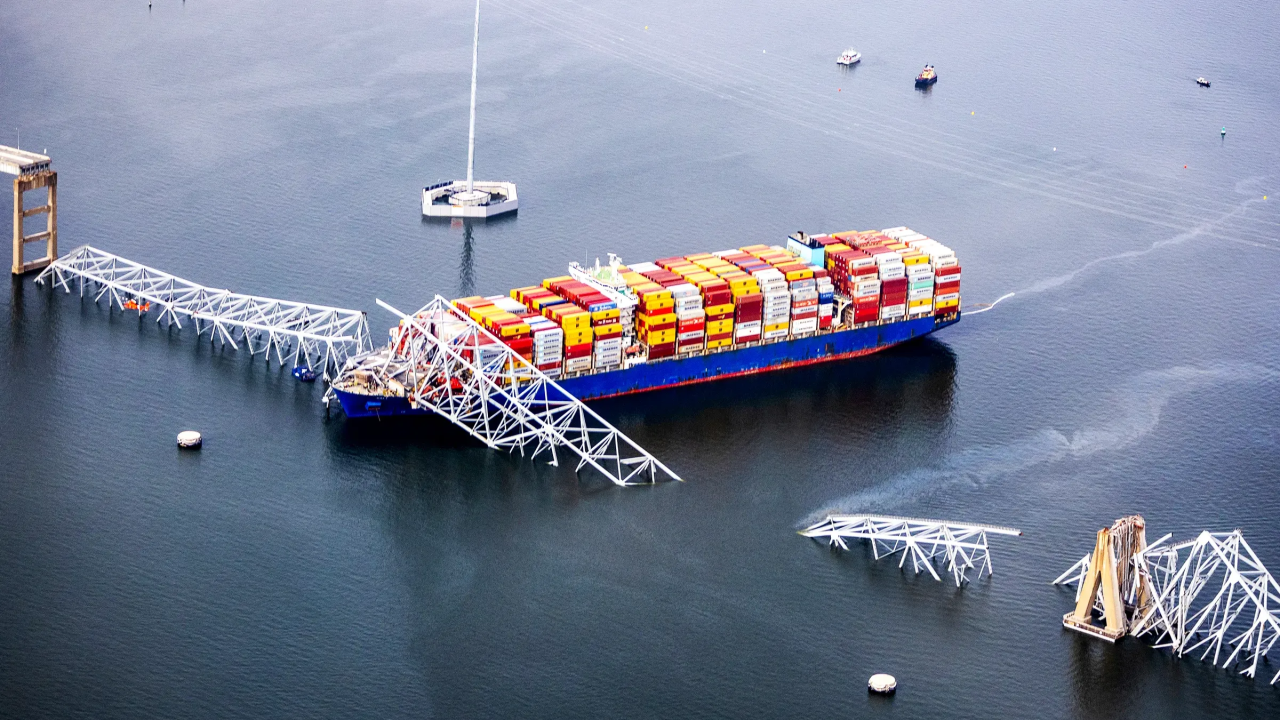
The litigation that followed highlights a broader issue that matters far beyond shipping: What happens when a catastrophic event causes a business to lose millions of dollars even though the business’s own property was never physically damaged?
That question can arise after hurricanes, fires, explosions, bridge collapses, utility failures and transportation accidents. A business may lose access to its property, customers may be unable to reach it, a government authority may restrict access, suppliers may shut down, or operating costs may rise sharply.
The financial loss can be enormous. But economic loss alone does not necessarily create a claim against the party that caused the event, and it does not automatically trigger insurance coverage.
In August 2026, the federal court overseeing the Dali litigation substantially dismissed claims seeking purely economic damages. Applying the maritime economic-loss doctrine, the court concluded that businesses generally could not recover economic losses resulting from damage to property in which they had no proprietary interest.
At the same time, certain claims involving actual physical damage to cargo aboard the Dali were allowed to continue.
That distinction is critical: Physical damage to a claimant’s property may create one recovery path. Economic losses caused by damage to somebody else’s property can create a very different one.
A PortMiami Example
Assume a Miami importer is expecting $10 million of goods through PortMiami. A vessel casualty blocks the channel for 15 days.
The cargo is not damaged. The warehouse is not damaged. The goods simply cannot arrive as planned.
The company incurs $225,000 to divert freight, $140,000 in additional trucking, $90,000 in storage and demurrage, $55,000 in overtime and expediting, $800,000 in lost sales and $150,000 in contractual penalties.
The total impact is $1.46 million.
The loss is real and directly connected to the casualty. Yet under the reasoning applied in Dali, those facts alone may not create a tort recovery against the vessel interests because the importer did not own property that was physically damaged.
The company may instead have to look to its insurance program, contracts and other available rights.
The Coverage Trigger Matters
A financial loss by itself does not trigger coverage. The policy must contain a provision that matches the event causing the loss.
Business income coverage generally requires covered direct physical loss or damage to insured property that causes a suspension of operations.
Extra expense coverage may reimburse additional costs incurred to continue operations or reduce a covered business income loss.
Civil authority coverage may apply when covered damage occurs elsewhere and a governmental authority prohibits or restricts access to the insured premises.
Ingress and egress coverage may apply when covered damage prevents access to or from the insured location.
Contingent business interruption or dependent property coverage generally addresses losses caused by covered damage at a supplier, customer or other qualifying dependent location.
For importers and exporters, marine cargo insurance generally focuses on physical loss or damage to goods in transit. Delay and resulting economic losses may be limited or excluded unless broader coverage has been purchased.
Specialized trade-disruption or supply-chain coverage may address some interruptions even without a traditional physical-damage trigger.
The first question after a casualty should therefore not simply be, “How much did the business lose?”
It should be: “What caused the loss, and which coverage provision was designed to respond?”
The Same Issue Exists Outside Shipping
Change the casualty and the same problem appears.
A fire damages a neighboring building and streets are closed. A hurricane damages public infrastructure near a hotel and authorities restrict access. A bridge collapse cuts off a business district. A utility failure shuts down a manufacturer. A critical supplier suffers a loss and cannot deliver components.
In each case, the business may suffer substantial lost income and extra expense without direct physical damage to its own property.
The financial consequences may look similar, but the insurance path can be very different.
Find the Gap Before the Loss
The most important lesson is what businesses and their brokers should identify before the event occurs.
Businesses should know which ports, suppliers, customers, transportation systems and public infrastructure they depend upon, what happens if those dependencies fail, and how much of that exposure is actually insured.
For an importer or exporter, the analysis may look like this:
port dependency → alternative ports → contractual responsibility → cargo ownership → insurance triggers → uncovered economic exposure.
The same approach applies in other industries: identify the dependency, model the interruption, quantify the financial impact and determine what is insured—and what is not.
Call Us Before the Loss—and Call Us First After It
Before a loss, we can work with the insured and its broker to identify economic exposures and potential gaps involving business income, extra expense, civil authority, ingress and egress, dependent property and related coverage.
After a casualty, call us first.
Before the loss is characterized simply as “no physical damage,” “delay,” “civil authority” or “economic loss,” the entire recovery picture should be evaluated.
The broader lesson from Dali is simple: A catastrophic event does not have to damage your building, inventory or equipment to cause devastating financial loss.
Businesses need to know before the event whether their insurance program follows that exposure—and after the event, the claim should be evaluated before someone else decides what kind of loss it is.
This article is intended for general insurance, claims and risk-management discussion and does not constitute legal advice.