
The Road Ahead: How Autonomous Vehicles Are Reshaping Transportation and Commercial Real Estate
Transportation is entering a new era. As autonomous vehicle technology continues to advance, its influence is extending beyond how people travel. It is beginning to reshape logistics, urban mobility, infrastructure planning, and the way businesses operate. For a rapidly growing region like Dallas–Fort Worth, these developments raise important questions about how cities, industries, and commercial real estate will adapt to a changing transportation landscape.

These were among the key themes explored during Industry Insights: Autonomous Vehicles – The Future of Transportation, presented by TREC and sponsored by GlobalPro. The panel brought together industry professionals to examine the realities of autonomous technology, from its deployment and safety considerations to the challenges of scaling operations across different sectors.
Beyond the Technology: Understanding Its Real-World Impact
The growth of autonomous vehicles represents more than an advancement in automotive technology. It signals a broader shift in the movement of people and goods.
As self-driving systems continue to develop, their potential applications across passenger transportation, freight, and logistics could influence how businesses manage operations and how communities approach mobility. Greater automation may also create new considerations for transportation networks, delivery systems, and the infrastructure supporting commercial activity.
For Dallas–Fort Worth, where population growth, business expansion, and regional connectivity remain important economic considerations, understanding these developments is particularly relevant.
The Questions Shaping Autonomous Innovation
While the possibilities are significant, the expansion of autonomous vehicles also depends on addressing important industry considerations.
Deployment requires more than developing the technology itself. Safety, public policy, infrastructure readiness, operational reliability, and the ability to scale across different environments all play a role in determining how autonomous systems become part of everyday transportation.
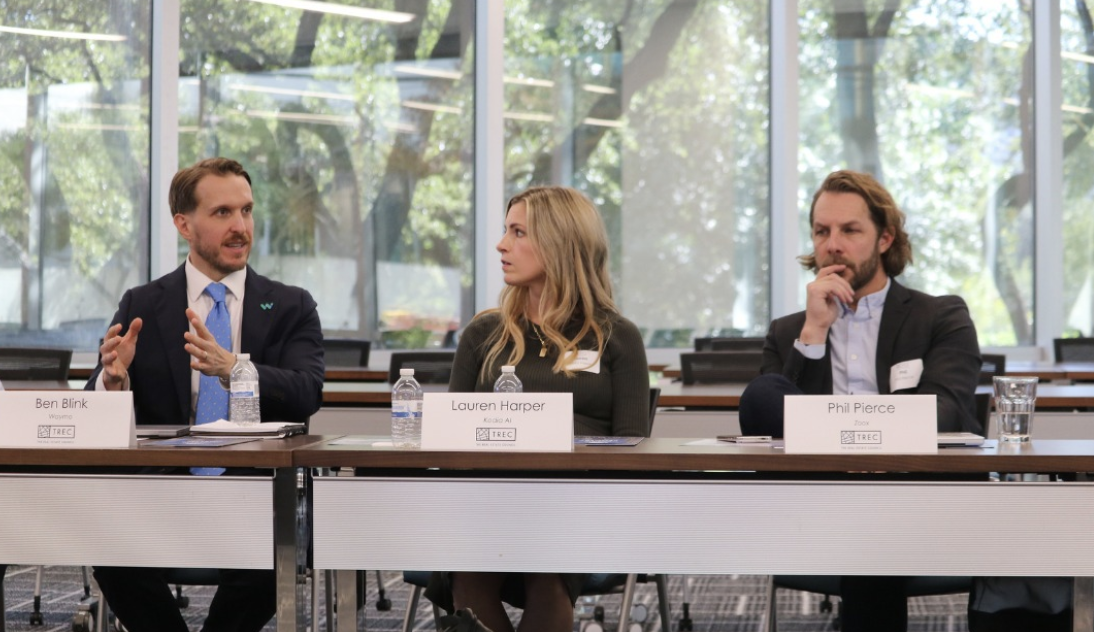
These considerations made the panel discussion especially valuable, bringing real-world perspectives from professionals working within the autonomous mobility industry. The conversation featured Ben Blink, Public Policy Manager at Waymo, Lauren Harper, Chief of Staff at Kodiak AI, and Phil Pierce, City Policy Lead at Zoox.
Their perspectives helped examine the developments, challenges, and opportunities shaping the future of autonomous transportation.
What It Could Mean for Commercial Real Estate
The evolution of transportation has always influenced how cities develop and where businesses choose to operate. Autonomous vehicles introduce another dimension to that relationship.
As mobility and logistics systems evolve, commercial real estate may experience changing demands for distribution facilities, warehouse locations, delivery infrastructure, parking, and transportation-oriented developments. Businesses may also need to reconsider how accessibility, location, and connectivity influence their operations and long-term property decisions.
While the full impact of autonomous technology remains to be seen, its continued development makes it an important subject for commercial real estate professionals, investors, developers, and business leaders to follow.
Looking Ahead: The Future of Transportation Is a Regional Conversation
The discussion reinforced the importance of examining emerging technologies not only through the lens of innovation, but also through their broader economic and community implications. As Dallas–Fort Worth continues to grow, the relationship between transportation infrastructure, commercial activity, and real estate development will remain an important part of the region’s future.
Presented by TREC in partnership with GlobalPro, the Industry Insights series creates opportunities for industry professionals to exchange perspectives, explore emerging trends, and better understand the forces shaping the built environment.
With one final Industry Insights event remaining this year, the conversation continues on November 17, with a closer look at how DFW’s air, rail, and roadway infrastructure has driven growth throughout the region and beyond.
The road ahead is changing. Understanding where it leads starts with conversations like these.