
From Conversation to Commitment: Brickell Advances Its Resilience Agenda
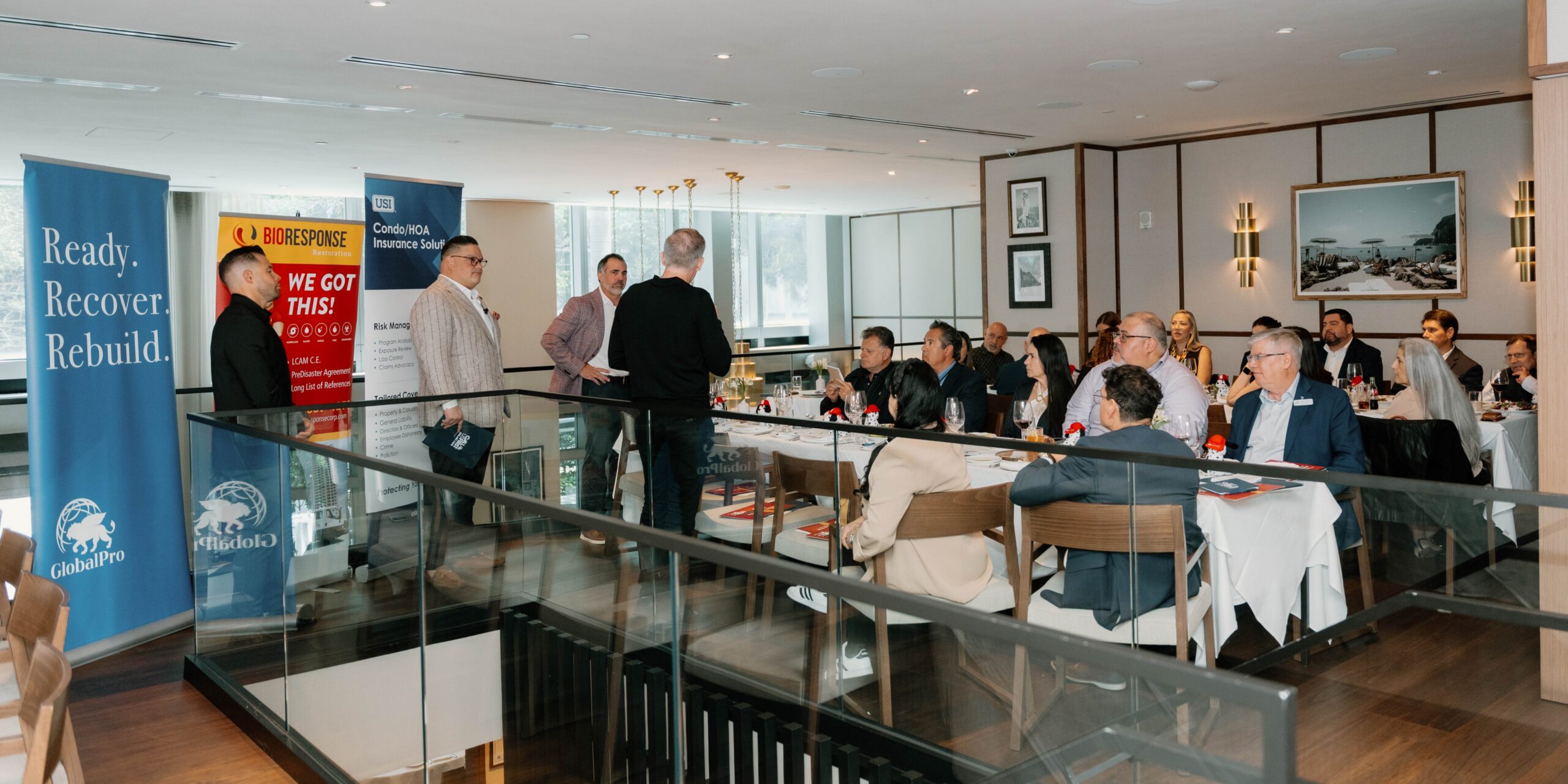
There are events that inform, and there are events that signal a shift… The Brickell Homeowners Association’s Lunch & Learn on March 19 did both.
What began as the formal introduction of the Resilience & Recovery Committee quickly evolved into something more substantive: a working dialogue grounded in real-world experience, shaped by those who have operated at the center of claims, mitigation, and recovery. It was not a theoretical exercise. It was a reflection of how the built environment must now think, decide, and act.
GlobalPro is grateful to have been part of that moment—and extends its appreciation to the Brickell Homeowners Association (BHA) for convening this initiative and creating a platform where meaningful, cross-disciplinary conversations can take place. Leadership at the community level is what makes progress like this possible.
Resilience and Recovery Committee Launch, Post-Video Highlights from Brickell Homeowners Association
At the center of the discussion was a simple but defining idea: resilience is no longer a downstream outcome, it is an upstream decision. The conversations reinforced what the industry is increasingly confronting: by the time a loss occurs, most of the variables that determine the outcome have already been set in motion. Documentation practices, maintenance standards, vendor relationships, and pre-loss planning are no longer operational details; they are strategic levers.
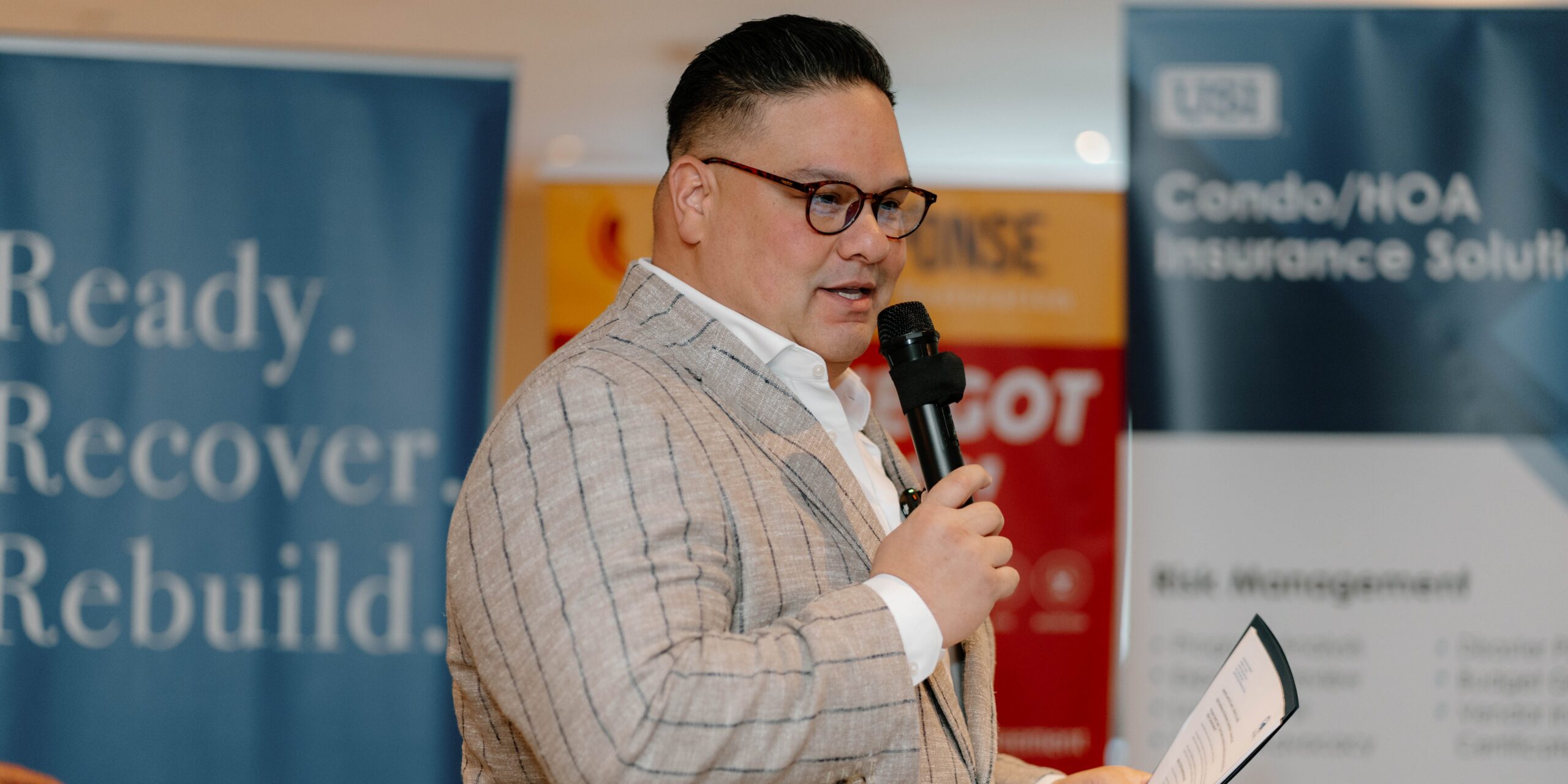
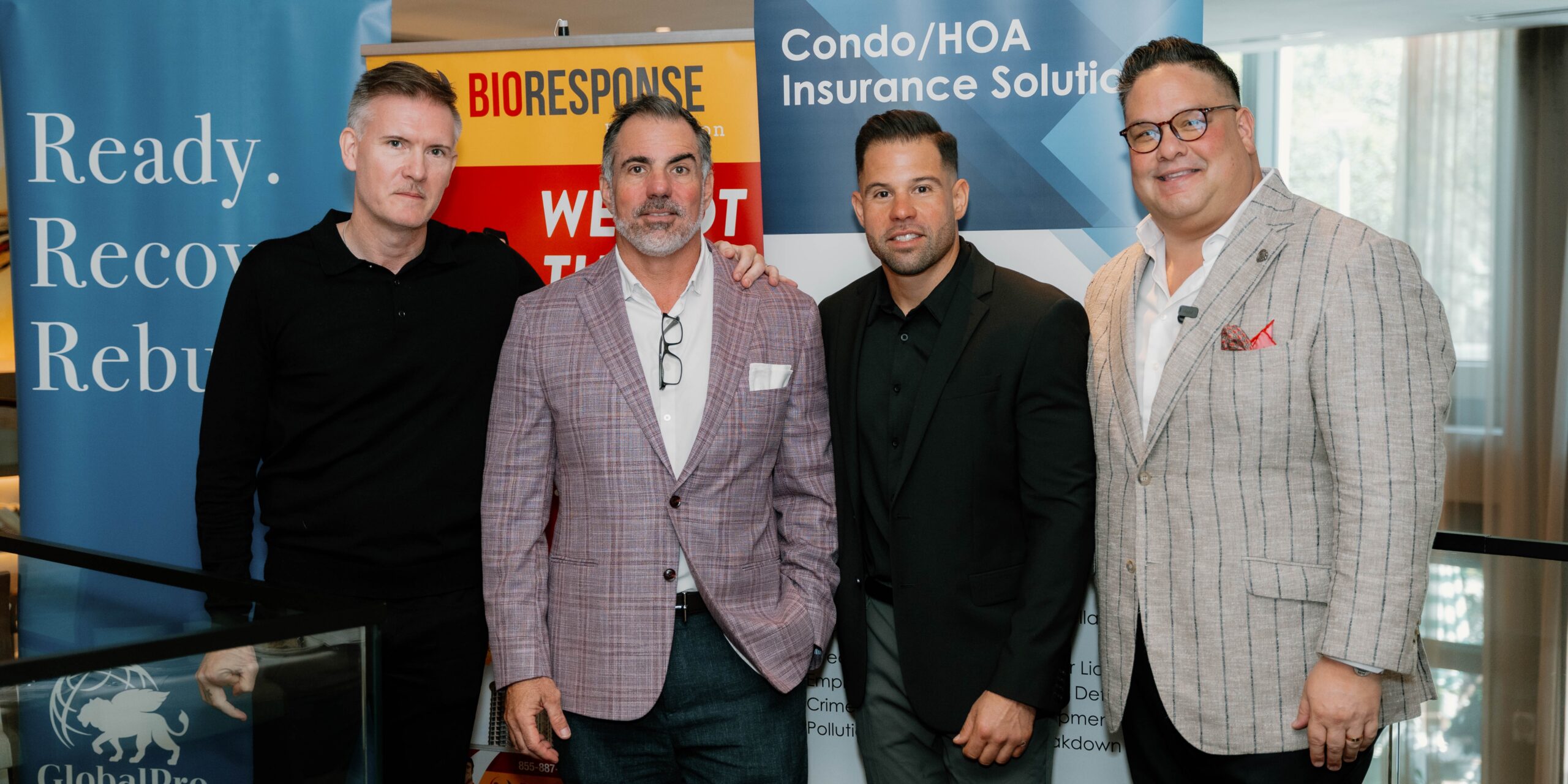
Led by Matthew Sengsourinh, President of GlobalPro Florida, alongside Manny Pozo of Bioresponse as Co-Chair, the panel brought together perspectives that are too often disconnected in practice but inseparable in consequence. With insights from Jeremiah Kiefer of The Deft Group and Lorenzo Cardenas of USI Insurance Services, the discussion moved fluidly across disciplines—insurance, engineering, mitigation, and recovery. Highlighting not only where breakdowns occur, but how alignment can be built.
One of the clearest takeaways from the event was that claims data, when viewed collectively, tells a story most stakeholders never fully see. Patterns emerge—recurring points of failure, gaps in coverage, delays rooted not in complexity but in miscommunication. These are not isolated incidents; they are systemic signals. And when those signals are understood early, they create an opportunity to act before disruption becomes loss.
That perspective reframed the role of the Committee itself. It is not simply a forum for discussion, it is a mechanism for translation. Translating experience into guidance. Translating data into strategy. Translating lessons learned into standards that can be applied across properties and portfolios.
The conversations also underscored a broader market reality: insurability is evolving. Carriers are not only evaluating properties based on location and exposure, but on preparedness, documentation, and demonstrated risk management. In this environment, resilience is no longer aspirational, it is measurable. And increasingly, it is priced.
What emerged from the event was a shared recognition that the path forward requires coordination. Not just within individual buildings, but across stakeholders. Property managers, board members, insurers, engineers, and recovery professionals each hold part of the equation. The Committee’s value lies in creating a space where those parts are no longer fragmented, but aligned.
There was also a noticeable shift in tone from urgency to intention. While the risks facing Brickell remain complex, the approach to addressing them is becoming more structured. Conversations around emergency response are being paired with discussions on long-term capital planning. Immediate recovery is being considered alongside future insurability. The lifecycle of risk: before, during, and after an event, is beginning to be viewed as a continuous system rather than a series of isolated moments.
For GlobalPro, the significance of this event goes beyond participation. It reflects a direction the industry has needed to move toward for some time, one where decisions are informed by experience, where collaboration replaces silos, and where preparation is treated as a core function of property stewardship.
Looking ahead, the work of the Committee will be defined not by its formation, but by its follow-through. Education must translate into action. Dialogue must lead to implementation. And the insights shared in rooms like this must ultimately be reflected in stronger buildings, more efficient recoveries, and more resilient communities.
That is where the real impact lies.
If the March 19 event marked the beginning of a new chapter, what comes next will determine its legacy. The foundation has been set. The alignment has begun. And for a district as dynamic as Brickell, that alignment, supported by the leadership of the Brickell Homeowners Association may prove to be one of its most important assets moving forward.